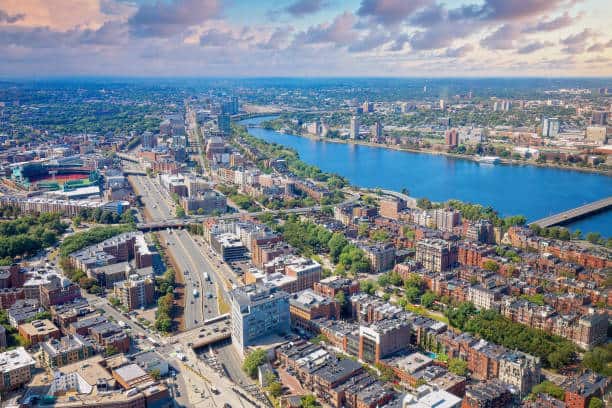
Quick answer: No. No credible indicator points to a Boston housing crash in 2026. Prices are holding firm and even rising in most segments, inventory has loosened to its most buyer-friendly level since 2021, and mortgage rates have eased to the mid-six percent range. What's actually happening is a slower, more negotiable, two-tier market, not a collapse.
"Crash" gets searched a lot because the fear is real and the prices are high. But a slight cooling and a crash are not the same event. Below is what the numbers say, why a collapse is unlikely, what is genuinely changing, and the honest risks worth watching.
First, what would a "crash" actually mean?
A housing crash is a fast, broad, double-digit drop in home values, usually driven by forced selling: waves of owners who have to sell into a falling market at the same time, often because of job losses or mortgages they can no longer afford. That is what happened in 2008.
A cooling market is different. Prices flatten or dip modestly in some segments, homes take longer to sell, and buyers gain negotiating room. Boston is doing the second thing. Confusing the two is where most "is it going to crash" panic comes from.
Where Boston prices actually are right now
The headline is stability, not decline. Over the three months ending May 2026, the median sale price in the city of Boston was about $852,000, up 1.9 percent from the same period a year earlier, according to Redfin. Boston proper has been running around an $875,000 median.
Zoom out to Greater Boston and single-family medians crossed the one million dollar mark again. The Greater Boston Association of Realtors reported the median single-family sale price climbed to $1,032,500 in April 2026, up from $989,500 a year earlier. Condo medians moved up to roughly $750,000.
The luxury end is the opposite of a crash. Downtown Boston's median jumped more than twenty percent year over year to around $1.7 million, with price per square foot up sharply.
Those are not crash numbers. They are firm-to-rising numbers with more variation underneath than the averages show.
Why a Boston crash is unlikely
Four structural forces are holding the floor up.
Supply is chronically short. Boston is old, land is scarce, and zoning stays restrictive. New housing permits statewide were down forty-four percent from their 2021 level as of mid-2025, which sets up a supply squeeze for 2026 and 2027, not a flood of inventory that would crater prices. The starter home has effectively vanished from the region.
The job base is deep. Universities, hospitals, biotech, and tech keep pulling people in. Demand for housing does not evaporate when your economy runs on medicine, research, and education.
There is no forced-seller wave. The 2008 crash needed motivated distress selling. Today most owners hold low fixed-rate mortgages and strong equity. Nobody is being pushed to dump a house below market, which is the exact ingredient a crash requires and Boston does not have.
Lending standards are sane. The loose, no-documentation lending that fueled the last crash is not how mortgages are written now. Buyers today are qualified.
Add it up and you get a market that can slow and negotiate, but has no mechanism to collapse.
What is actually changing in 2026
This is the part that matters more than the crash question.
Rates eased. The thirty-year fixed averaged 6.49 percent as of July 9, 2026, down from 6.72 percent a year earlier, per Freddie Mac. The fifteen-year sat near 5.82 percent. On a $700,000 loan, the year-over-year drop trims well over one hundred dollars a month off principal and interest. Not dramatic, but real.
Buyers have more room. Inventory has loosened to the most breathing room buyers have had since 2021. Well-prepared, well-priced homes still move fast. Overpriced listings now sit, which was not true a couple of years ago.
It's not one market, it's several. Triple-decker-era condos in the five hundred thousand to eight hundred thousand dollar band across Jamaica Plain, Dorchester, Roxbury, and South Boston are the most liquid entry point in the city and close at or above asking. Single-family homes in the outer city belt (West Roxbury, Roslindale, Hyde Park) run hot. Meanwhile modern downtown condos above two million dollars sit for months, and some suburban luxury has softened on sale-to-list. The frenzy normalized. It did not reverse.
The industry framing for 2026 is a thaw, not a bust. The multi-year standoff, buyers waiting for pandemic-era rates that are not coming back and sellers clinging to low mortgages, is finally breaking as life events push people to transact.
The honest risks
A responsible answer names what could still go wrong. Rates could climb again if inflation resurfaces, which would pinch affordability and slow sales further. The luxury and new-construction condo segment downtown is genuinely soft and could stay that way. And a national economic shock is always possible, though even then Boston's supply shortage cushions the downside.
None of those is a crash scenario. They are reasons to price and negotiate carefully, which is a different task than bracing for a collapse.
What this means if you're buying
You have more leverage than buyers had in 2022, especially on anything that has been sitting. Know the segment you're shopping. In the liquid triple-decker-condo and outer-belt single-family markets, come strong. In the downtown luxury condo market, negotiate. Waiting for a crash to bail you out is a bet the data does not support.
What this means if you're selling
Firm prices are on your side, but the market rewards preparation and punishes over-ambition. Well-presented, correctly priced homes still sell quickly. Homes priced to peak-2025 fantasy sit and then chase the market down. Price to where the data is, not where you wish it were.
Frequently asked questions
Will the Boston housing market crash in 2026? No credible data supports a crash. Prices are firm, inventory has loosened, and there is no wave of forced sellers. Expect a slower, more negotiable market rather than a collapse.
Are Boston home prices going down in 2026? Not broadly. Citywide medians are up modestly year over year, and Greater Boston single-family medians crossed one million dollars again. Some segments, like downtown luxury condos, have softened, but the overall trend is firm.
Why are Boston home prices so resistant to falling? Chronic supply shortage, restrictive zoning, a deep job base, strong owner equity, and disciplined lending. Those conditions block the forced-selling spiral that causes crashes.
Is 2026 a good time to buy in Boston? It's a better time than the frenzied 2021 to 2022 market for many buyers, with more inventory and more negotiating room. The right answer depends on the neighborhood and price band you're shopping.
What are mortgage rates in Boston right now? The thirty-year fixed averaged about 6.49 percent as of early July 2026, down from roughly 6.72 percent a year earlier, per Freddie Mac.
Want a straight read on your specific neighborhood and price band, backed by MLS data rather than headlines? Reach Chris Remmes at Remmes & Co. — [email protected] or 617-398-0015.
Check out this article next