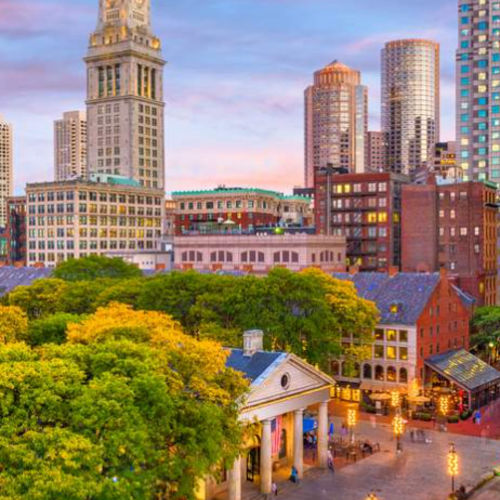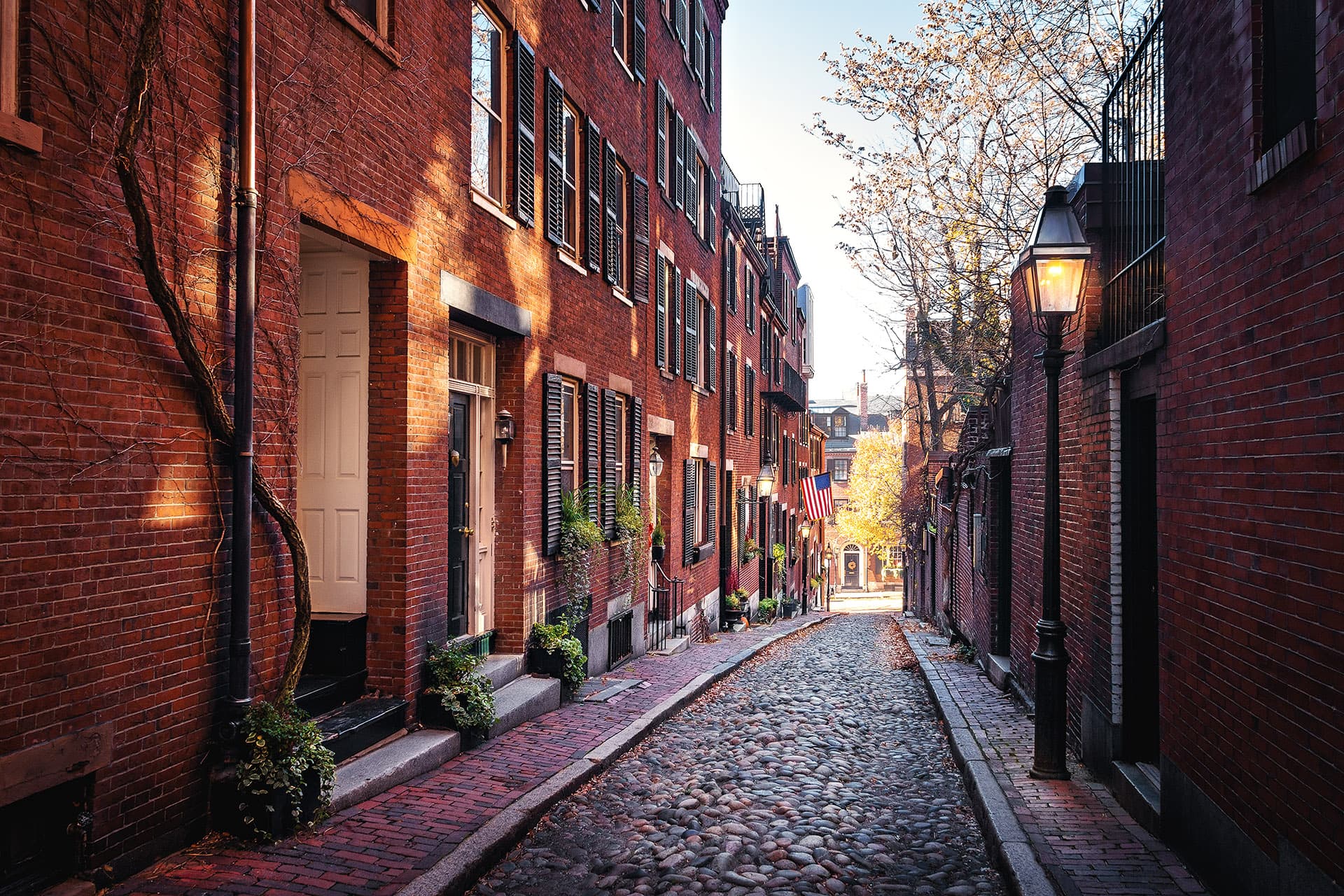
The South End is the largest intact Victorian rowhouse district in the country, listed on the National Register of Historic Places. It has the best restaurant density in Boston, the strongest arts scene in the city at SoWa, and a set of landscaped English-style squares that look like nothing else in America.
It also sits on filled land, and many of its buildings rest on wooden pilings that survive only as long as they stay below the water table.
Both facts are true. Only one of them shows up in neighborhood guides.
What it actually is
Built on filled land in the mid-nineteenth century and laid out around residential squares. The South End Landmark District governs it, which means exterior changes are subject to landmark review — preserving the streetscape, and constraining what you can do to your own building.
Most housing is multi-story Victorian brownstone and brick rowhouse, largely converted to condominiums, with brick walk-ups, low-rise condo buildings, and loft or newer construction around SoWa. The population runs roughly 60 percent renters, 40 percent owners. A common layout is the floor-through condo occupying an entire brownstone level, with high ceilings, original moldings, and bay windows.
The numbers, and why they disagree
Vendor snapshots put the South End median somewhere between roughly $1.1 million and $1.35 million, with price per square foot generally a little above $1,100. One portal's January 2026 snapshot placed the median sale price near $1.35 million at about $1,160 per square foot. MLS-based condo summaries over a different window showed a median closer to $1.07 million at $1,112 per square foot. Median days on market has ranged from the mid-30s to the low 80s depending on the data set, with one June 2026 snapshot at 41 days.
The spread is the useful information. Whether the sample includes single-family brownstones changes everything — full conversions run into the millions and there are so few that a single trophy sale moves the monthly median. A Union Park transaction closed at $12.1 million. That is a real sale and a useless comparable for almost everyone.
For positioning: recent data showed Back Bay at a $1,434,000 median sale price against the South End at $1,375,000, with Back Bay carrying a higher price per square foot. The South End is firmly luxury tier and still trades below Back Bay and Beacon Hill.
Rents have averaged roughly $3,900 to $4,100 a month.
The blocks
Union Park and the squares. The crown jewels. Intact Victorian rows around landscaped ovals. Full single-family conversions run well into the millions. The most prestigious addresses in the neighborhood.
Tremont Street. The restaurant artery — brownstone condos with direct walkability to the best dining in the city, at a premium for the address. Also understand what living above a restaurant corridor means at 11 p.m. on a Saturday.
SoWa. The creative core. First Friday openings, open studios, the market. Loft-style condos and converted industrial space alongside newer construction. Strongest appreciation as the arts scene drew wider attention.
The Back Bay edge. Orange Line access at Back Bay station, more condo development, slightly more accessible pricing.
The five real problems
1. Pilings and groundwater
The one specific to filled-land neighborhoods, meaning the South End and Back Bay.
Many buildings here sit on wooden pilings driven through fill to firm ground. Those pilings last because they stay submerged. Wood under water lasts indefinitely; wood exposed to air rots. If the groundwater level drops — from construction dewatering nearby, or a leaking sewer or drain line pulling water away — the tops of the pilings deteriorate and the building settles.
The repair is underpinning, and it is a major structural project. Ask about pilings, ask about groundwater management, and ask whether the building has had underpinning or structural work.
2. Parking, and the space saver ban
Parking is a property-specific feature here, never an assumption. Boston's resident permit program exists citywide, but that does not mean your unit comes with anything off street. A deeded space is worth real money on its own.
And the rule that catches people: space savers are banned at all times in the South End. Not limited to a 48-hour window after a snow emergency like most of the city. Banned, always. The winter routine where you dig out a spot and hold it is not available here.
3. Garden-level units
The neighborhood is full of them. Same square footage on paper as the parlor level above, same bedroom count, priced meaningfully lower. What you are buying is limited light regardless of what you do, windows facing a retaining wall or the sidewalk, proximity to every mechanical system in the building, and the unit most likely to have a water or freezing issue. The discount is real and it exists for reasons — and the next buyer will apply it to you.
4. Landmark review
Exterior changes including windows are subject to district review. The single-pane window replacement you assumed you would do in year three may not be available, or may only be available in an expensive historically appropriate version. Ask about the approval process for your specific change before you buy.
5. Small associations, big buildings
A six-unit brownstone conversion has six owners responsible for a roof, a facade, a masonry envelope, and possibly a piling situation. No economy of scale. A $100,000 facade project in a six-unit building is a completely different conversation than in a sixty-unit building.
So: pull the reserve balance and divide by unit count. Pull five years of budgets and look at fee trajectory. Read 12 to 24 months of board minutes, where capital work appears a year before it becomes an assessment. And get the master insurance declarations page with the deductible — masonry premiums have risen sharply and some associations absorbed it by raising the deductible rather than the fee, which moves risk onto owners.
Who this neighborhood is for
Yes: Someone who wants architecture and walkability and will actually use a dining and arts neighborhood. Professionals and households working in Back Bay or the medical centers. Someone comfortable with a historic building and its obligations, and either car-free or willing to treat parking as a separate purchase.
No: Someone who needs parking to be easy. Someone who wants to renovate freely. Someone buying a garden-level unit because it is the only thing in budget, without understanding why it is priced that way.
The one question
Before you write an offer on any South End brownstone or conversion: what is this building sitting on, and has anyone checked the groundwater?
Ask the listing agent, ask the association, and get it answered in documents rather than conversation. You want to know whether the building is on wooden pilings, whether there is any history of settlement, whether underpinning has been done, and whether groundwater has ever been monitored.
Everything else in a South End purchase is knowable through ordinary diligence — fees, reserves, minutes, insurance, parking, landmark restrictions, all in documents you can request. The piling question is the one that is structural, expensive, and invisible, and it is the one nobody asks because nobody told them to.
Clean answer, and you are buying into one of the best residential neighborhoods in the country. Vague answer, and you have found the thing worth walking away over.
Send me the address of anything you are considering and I will tell you what I know about that block, what I would want out of the association's documents, and whether the price makes sense against what actually sold nearby.
Chris Remmes, Managing Broker, Remmes & Co. [email protected] | 617-398-0015
Price and rent figures compiled from multiple 2026 vendor and MLS-based snapshots, which vary meaningfully by sample and time frame — treat them as ranges, not precise values, and confirm against current comps for any specific property. Landmark district and space saver rules per the City of Boston.
Check out this article next